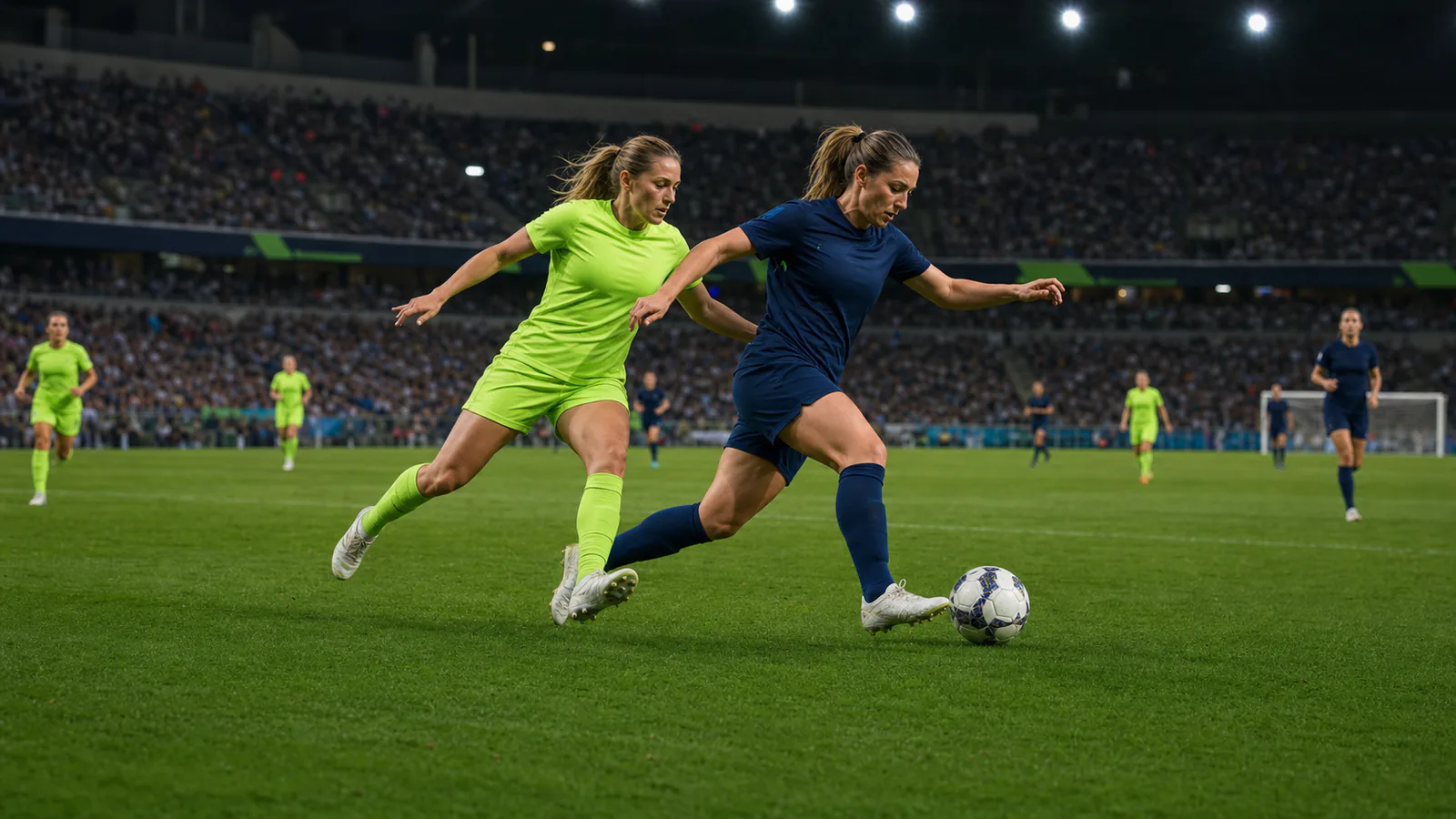
FIFA has put the spotlight on sustainability and human rights in relation to the 2027 Women’s World Cup. That matters because these are not side issues around a major tournament: they affect how an event is planned, delivered and judged beyond the football itself.
However, the available source metadata is limited. FIFA’s Inside FIFA headline identifies a “FIFA Women’s World Cup 2027™ Sustainability & Human Rights Strategy”, but the supplied information does not set out what the strategy contains.
What FIFA has published
According to the supplied FIFA source metadata, an Inside FIFA item carries the headline: “FIFA Women’s World Cup 2027™ Sustainability & Human Rights Strategy”. The item is dated Tuesday, 4 August 2026.
That establishes that FIFA is presenting a strategy connected to the 2027 Women’s World Cup and focused on two areas: sustainability and human rights. It does not, on its own, confirm specific targets, rules, responsibilities or deadlines.
Why the wording matters
A strategy is usually a framework: it can set out priorities, aims and the direction an organisation wants to take. But the source metadata supplied here does not say which of those elements FIFA has included in this particular document.
So it would be a stretch to claim the strategy promises a certain environmental outcome, creates new protections or imposes requirements on particular groups. Those details are not available in the headline and summary provided.
Sustainability is part of the tournament conversation
The presence of sustainability in FIFA’s headline shows that the topic is being linked directly to the 2027 competition. In simple terms, sustainability concerns how an event deals with its wider impact over time, rather than only what happens on the pitch.
That is useful context for fans following the build-up to a World Cup. A tournament is bigger than its fixtures, squads and trophy ceremony. Still, FIFA’s supplied metadata gives no detail on the exact sustainability issues addressed, so no further conclusions can be drawn from it.
Human rights are named too
Human rights are also explicitly included in the title of FIFA’s publication. That makes them a stated part of the strategy’s focus, rather than an assumption added by outside observers.
Yet the metadata does not explain how FIFA defines its approach for this tournament, who the strategy applies to, or how progress would be measured. There is no supplied information about policies, reporting systems or enforcement, and those points remain open.
What has not been confirmed here
The source material does not provide a list of commitments. It does not name any partners, venues, teams, players or host-city arrangements connected to the strategy.
It also does not state whether the publication marks a new policy, an update to an existing approach or a plan with fixed milestones. There are no quotes in the supplied metadata, so none can be attributed to FIFA or any other person.
The next useful step
For now, the clearest takeaway is straightforward: FIFA has published an Inside FIFA item centred on a sustainability and human rights strategy for the 2027 Women’s World Cup.
The next verifiable moment will be the release or availability of the strategy’s actual detail. That is what would show what FIFA is committing to, how those commitments are meant to work and how fans can assess the plan over time.
More football news for you
 Competition
Atalanta's Crisis Deepens After Ajax Defeat
Atalanta's crisis has grown after their 2-0 defeat to Ajax, according to Voetbal International. The Italian club's struggles…
 Competition
Blind Returns to Ajax After Injury
Daley Blind has made a comeback at Ajax after an injury, according to VoetbalPrimeur. The 36-year-old midfielder was out of …
 Competition
Heerenveen Wins Thrilling Match Against ADO Den Haag
Heerenveen has won the match against ADO Den Haag with a score of 2-3, according to NOS Voetbal. The match was a thrilling o…
 Competition
PSV on the brink of World Cup for clubs qualification
PSV can take a serious step towards the 2029 World Cup for clubs this season, according to NOS Voetbal. The qualification fo…